Sizes and colors get mixed
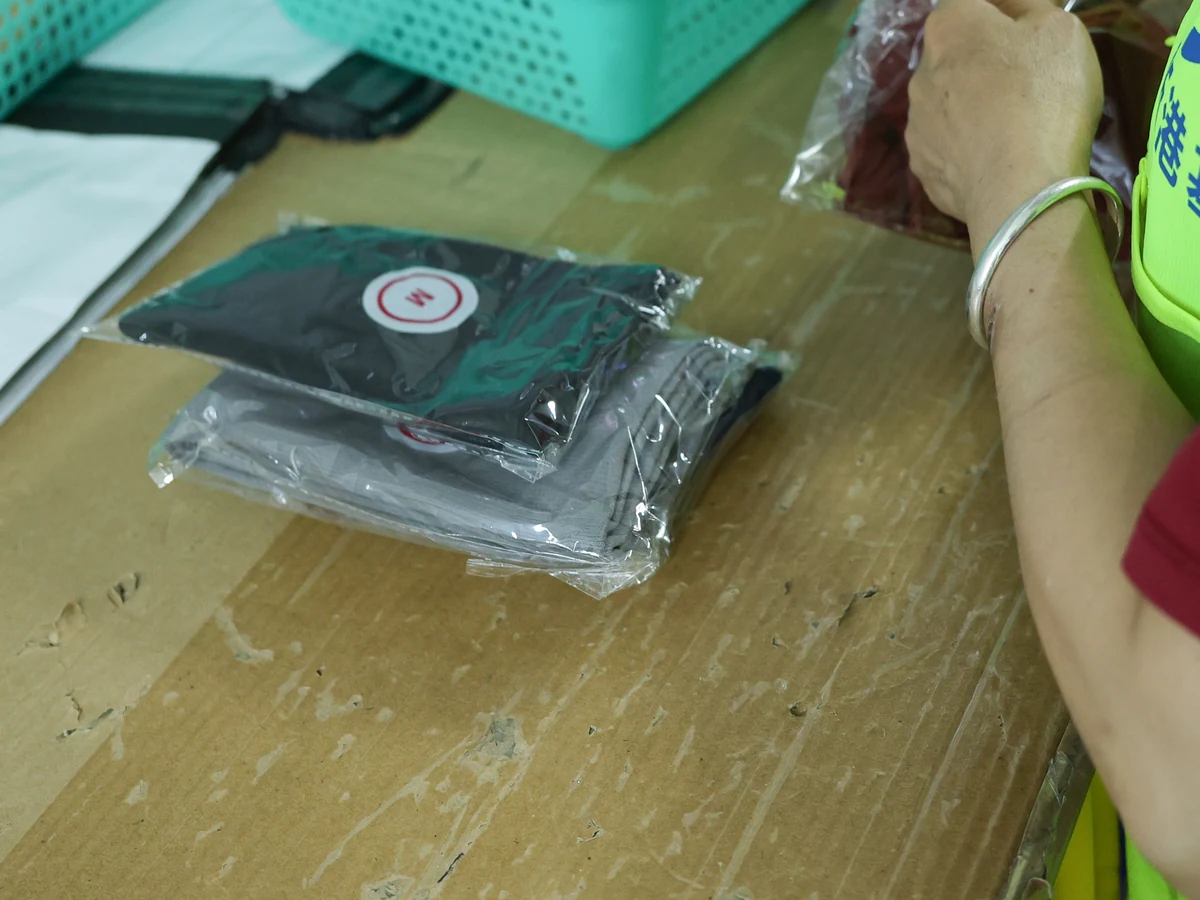
Folded garments can look alike. Keep the style, color and size readable on the bag so the variant can be checked without unpacking it.
Plan the right tag, size sticker and bag label for every style, color and size.
Share your variant list to plan printing and application together.
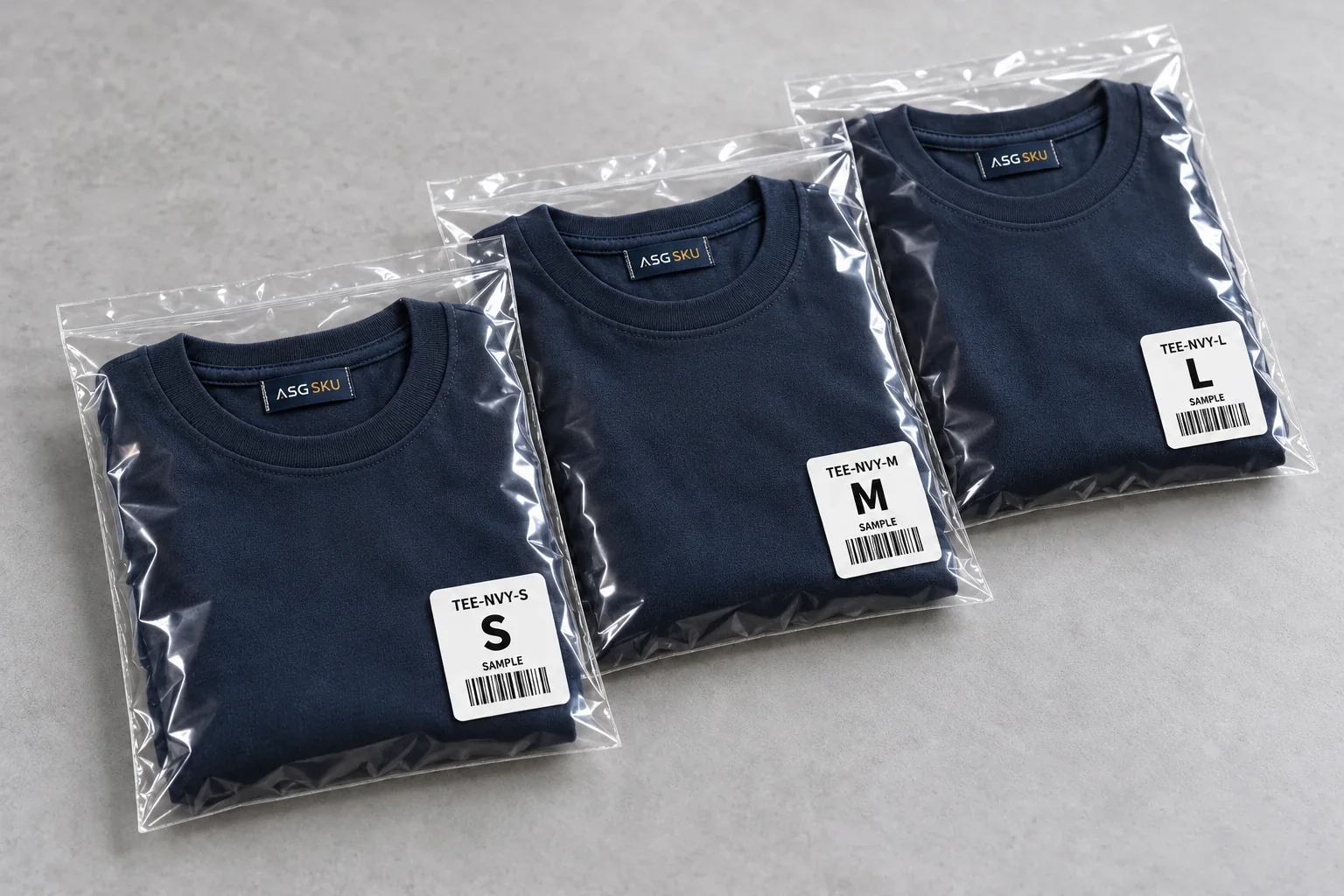
Similar garments need distinct identification at every handover.
Folded garments can look alike. Keep the style, color and size readable on the bag so the variant can be checked without unpacking it.
A correct hang tag can still be paired with the wrong bag sticker. Link both artwork versions to the same variant before printing or application.
Retail tickets, internal SKU labels and marketplace labels serve different tasks. Confirm the buyer or channel requirements before approving placement.
A garment barcode label links the item to one specific variant. Keep your internal SKU separate from the GTIN used in a retail barcode, and record both in the same variant list.
A hang tag can carry the retail code, while a size sticker identifies the bagged garment. Channel labels may be added where the destination requires them. Plan these with your apparel branding, rather than treating each label as an unrelated file.
Example internal SKU: TEE-NVY-M. This is not a GTIN.
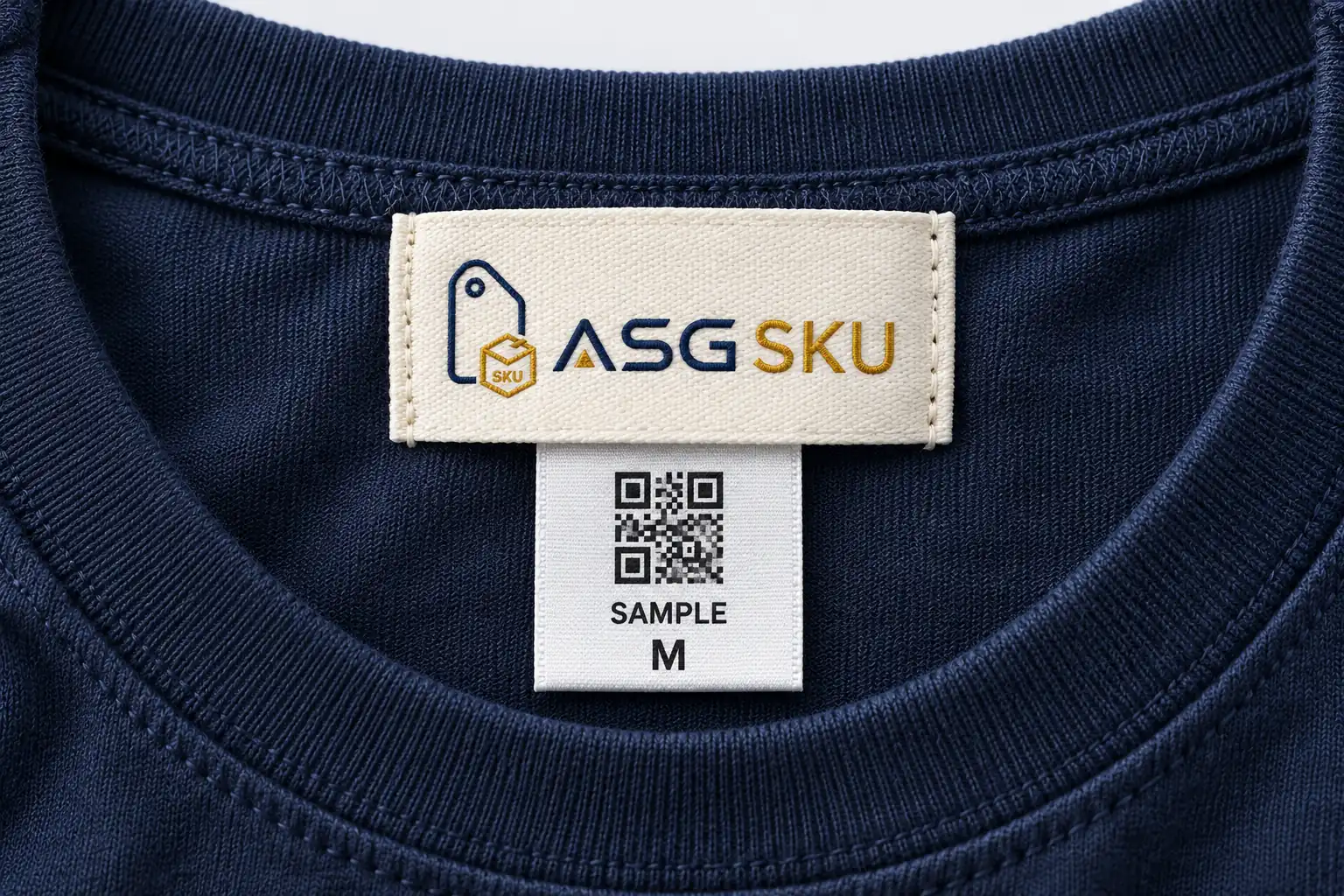
Pick the placement first. Each format is quoted per design and size.
Scroll across to compare all specifications.
| Format | Where it goes | Barcode |
|---|---|---|
| Barcode hang tag | Swing tag on the garment | UPC / EAN + price |
| Barcode sticker for hang tag | Added to an existing tag | UPC / EAN or SKU |
| Size sticker | Outside of the poly bag | SKU code + size |
| Printed garment label | Sewn in or heat transfer | SKU or QR code |
Confirm format availability, stock, adhesive, label dimensions and print method for the intended garment, tag or bag. Review barcode placement and any agreed scan checks on the sample. Minimum quantities and timing are confirmed in your quote.

Reserve the barcode area when you design the tag. Compare direct variable printing with a separate sticker, and confirm the finish and readable margins on the proof.
Plan the paper and branding on the custom hang tags page.
Choose the label set for the destination, not only for the garment.
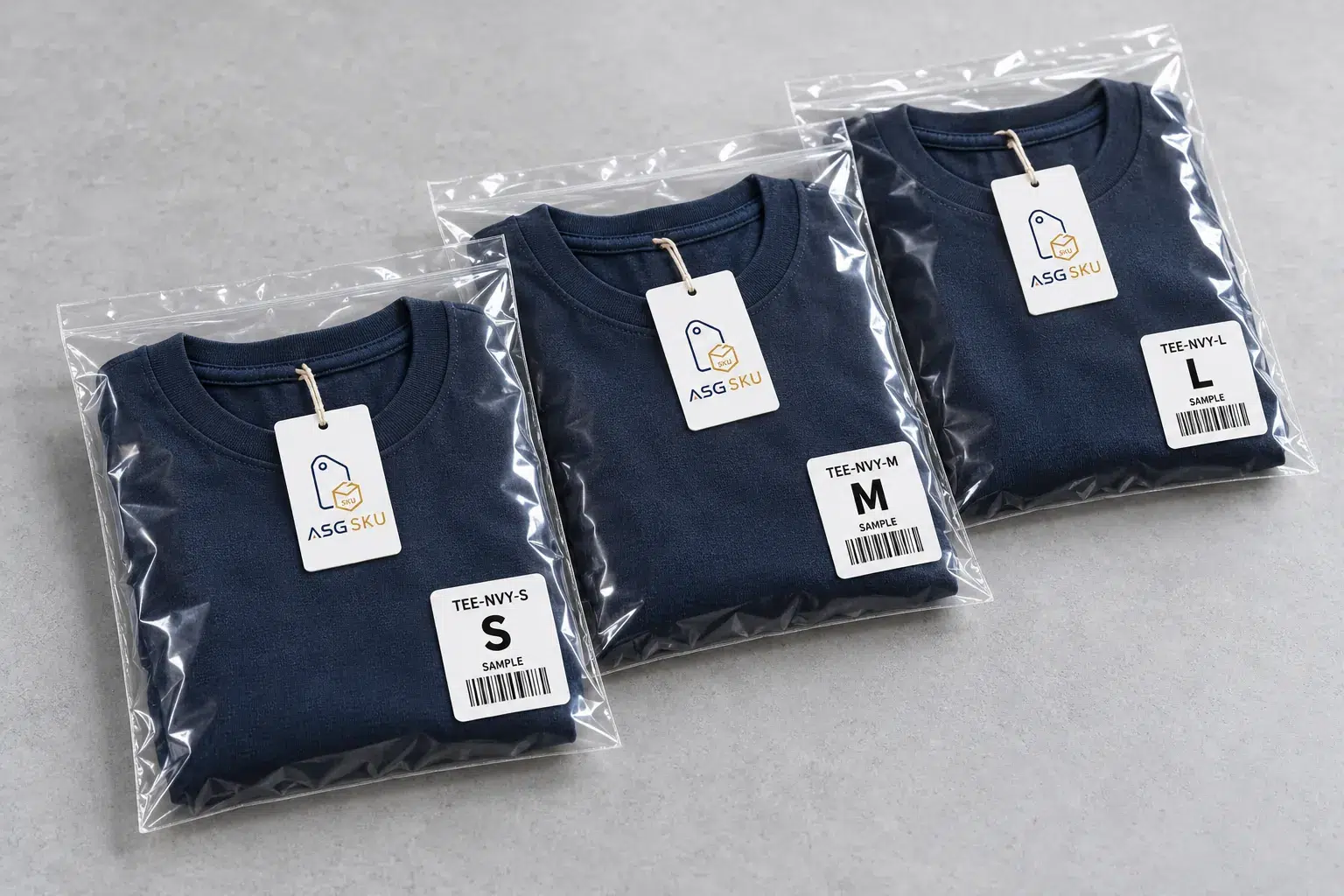
Share the buyer’s ticket specification, approved GTINs and placement instructions. Check the tag on the garment before dispatch; acceptance requirements vary by buyer.
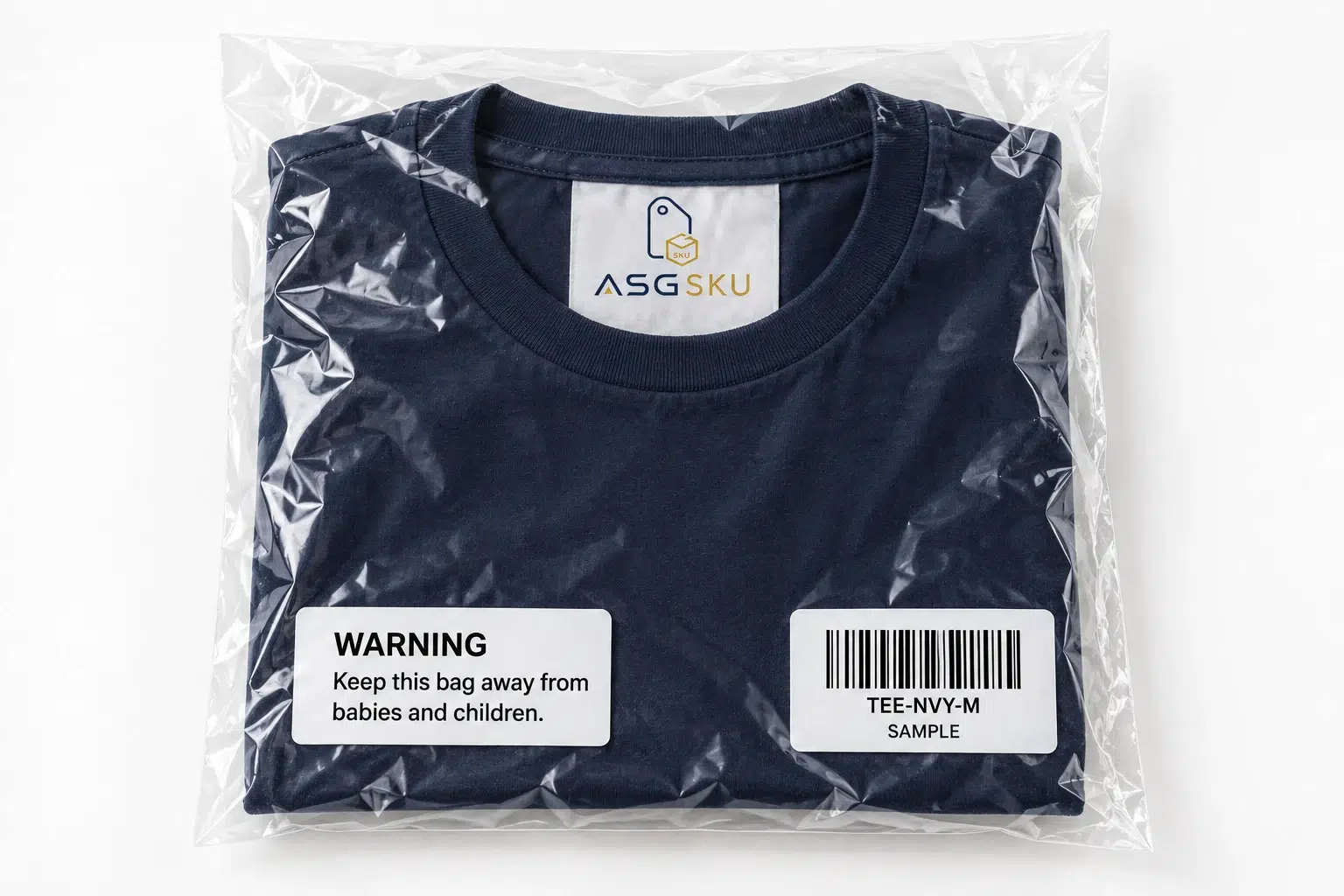
Confirm the required unit identifier and packaging rules in the applicable Seller Central workflow. Where required, place the assigned label and warning on the outer bag.
Use your internal SKU to distinguish bagged variants. Record any additional destination labels separately so the required label set can be selected for the order.
Link the garment SKU to the approved tag, barcode file, size sticker and bag. Record any destination-specific label as a separate requirement.
When artwork changes, record the new version and how remaining old stock should be handled. Confirm the change before the next packing batch.
| SKU | Barcode label | Also apply |
|---|---|---|
| TEE-NVY-S | UPC on hang tag | Size sticker S on bag |
| TEE-NVY-M | UPC on hang tag | Size sticker M on bag |
| HOOD-BLK-L | FNSKU on bag | Warning if required |
| DRESS-RED-8 | Retailer ticket | Store hanger + tag |
Example rules. We confirm tag versions, destination requirements and checks for your variants.
Swipe or use the arrow keys to view all columns.
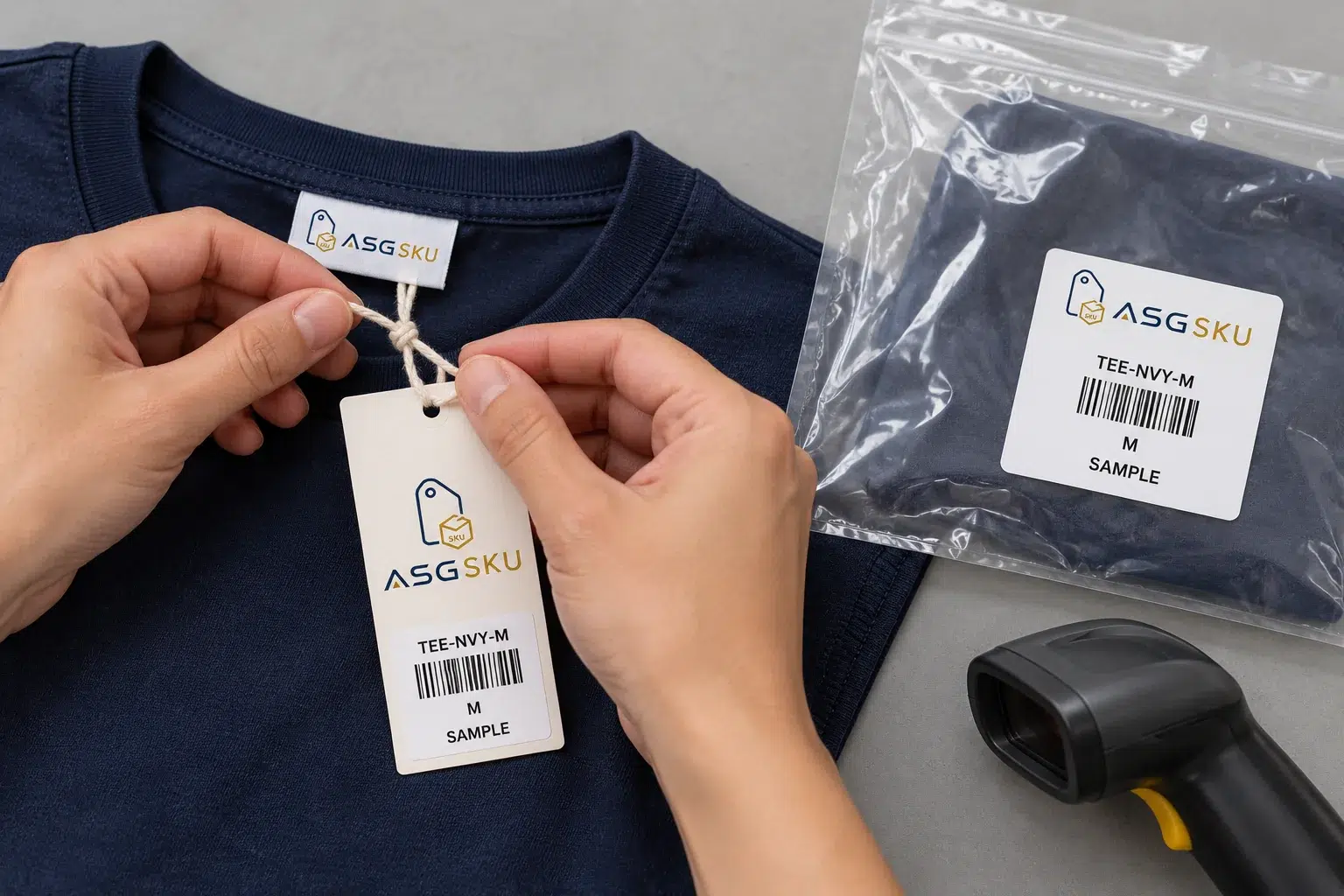
Prepare the garment, tag and bag from the same variant list. Agree the attachment point, sticker position and checking scope before application starts.
Confirm service availability, equipment and any per-unit scan requirement on the quote.
Approve the data, the printed sample and the application method.
For GTIN-identified apparel, each size and color variant needs its own GTIN. Provide authorized data and agree duplicate and missing-value checks before printing.
Review print contrast, readable margins, tag attachment and adhesion to the actual bag. Agree handling tests and any formal barcode verification separately.
If you request recycled or certified stock, ask for the relevant supplier documents and confirm the construction.
Reference: GS1 on size and color variants. Internal SKU codes and channel identifiers have different roles.
Prepare your size and color matrix, label placements and tagging scope for a project quote.
Scroll across to compare all specifications.
| To plan | What to share | What affects the quote | Confirmed in your quote |
|---|---|---|---|
| Styles & variants | Style, color and size matrix; barcode list and quantities per variant. | Label format, stock, dimensions and the quantities by design. | Material specification, minimum quantity and unit price. |
| Artwork & sample | Hang tag artwork, barcode placement and the garment or bag surface. | Variable printing, finishing and the sample checks you request. | Approved artwork, sample scope and agreed verification. |
| Tagging & delivery | Which tag and sticker belong to each SKU, plus your delivery destination. | The tagging, bagging, checking and delivery scope you request. | Agreed responsibilities and production and delivery timing. |
Send your variant list, label dimensions, quantities and artwork together. Minimum quantities, prices and timing are confirmed for your project in the quotation. Compare barcode label MOQs by material.
Agree who handles each part of the work.
Scroll across to compare all specifications.
| Task | Print specification | Application plan |
|---|---|---|
| Barcode data | Authorized data for each variant | Match files to style, color and size |
| Tag and sticker | Approved format and artwork | Matching tag and bag sticker |
| Attachment | Printed tag or sticker supplied | Agreed attachment point and bag position |
| Checking | Agreed print checks | Agreed variant and order checks |
| Channel labels | Destination-specific artwork | Apply only the agreed label set |
This compares work stages, not competitor capabilities. Confirm what is included in your project.
Start with one agreed variant list.
Share styles, colors, sizes, authorized barcode data and sales channels.
Plan the hang tag, outer bag sticker and any garment identification label.
Check the complete garment and packaging. Agree scan checks, cost and sample timing.
Approve quantities, print files, lead time and stock delivery location.
Record versions, placements and checks before the first packing batch.
Variants, label positions and the handover to packing.
Build a list of styles, colors and sizes with a distinct internal SKU for each variant. Where your sales channel uses GTINs, obtain authorized identifiers and map them to those variants. Choose the appropriate barcode format and placement from the buyer or channel requirements, then approve the printed sample.
For apparel identified with GS1 GTINs, each size and color variant needs a separate GTIN. For example, four colors in five sizes make twenty variants. Your internal SKU should also distinguish them. Confirm authorized numbers and whether the quantities can share a print run; do not reuse one product identifier across different variants.
A retail barcode may appear on a hang tag or a sticker attached to it. Bagged products may also need an identifier visible on the outer bag. Check the retailer or channel placement specification and avoid folds, seams or packaging that obscures the code. Record the approved position for each format.
The retail product identifier and the label required on an FBA unit are different decisions. Check the barcode setting, product eligibility and destination requirements in the applicable Seller Central workflow. Do not assume one label is accepted in every channel; approve the exact label set before packing.
Share the stock location, variant list, quantities and current packaging so availability and relabeling scope can be confirmed. Agree tag removal or replacement, rebagging, checking and completion records before work starts. Processing time and readiness for a destination need confirmation on your quote.
Share your styles, sizes and channels. Labels & stickers and Hang tags are selected to help you plan a coordinated quote.
Fields marked are required. Select all packaging types that apply.
Add these details to your project notes.