Peeling, smudging or fading
A label needs to suit the container and its use: dry storage, wet hands, cold conditions or repeated handling. Review the material, adhesive and printed finish together.
Match the material to the container, make each variant recognizable, and plan where every sticker goes.
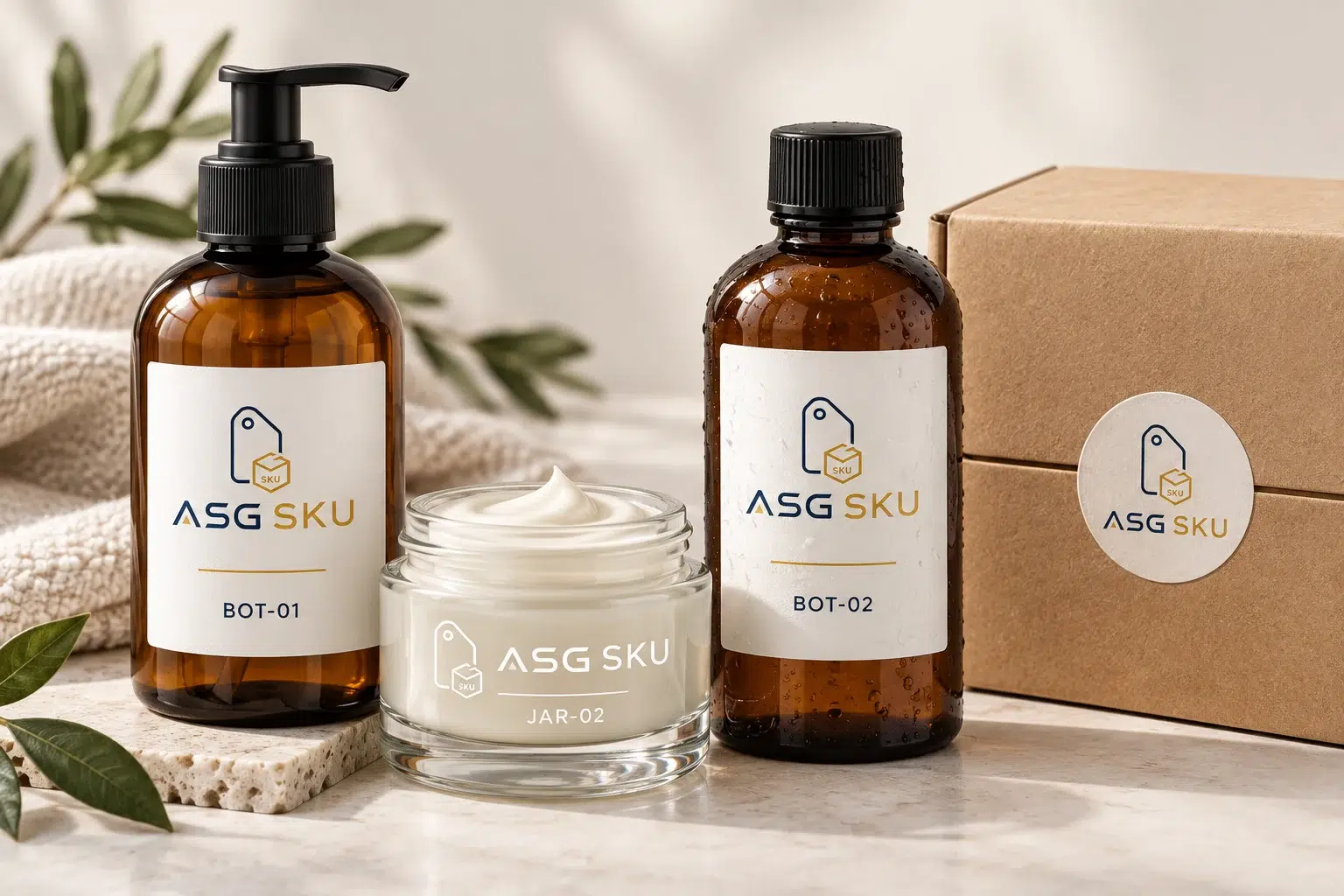
Check the surface, the artwork version and the quantity before committing to a print run.
A label needs to suit the container and its use: dry storage, wet hands, cold conditions or repeated handling. Review the material, adhesive and printed finish together.
Similar bottles can carry different formulas or scents. Give each artwork version a clear identifier and link it to the product SKU before application.
A range with many variants can mean several minimum order quantities. Plan quantities per design and confirm whether any setup can be shared.
Custom labels are self-adhesive labels printed with your artwork and cut for the product or package. They cover bottles, jars and pouches, as well as logo stickers used on outer packaging.
Specify four things together: the face material, adhesive, size and shape, and delivery on sheets or rolls. Confirm roll direction and core size if a dispenser or machine will apply them.
Keep product branding separate from identification requirements. For scannable item labels, see barcode, SKU and FBA labels.
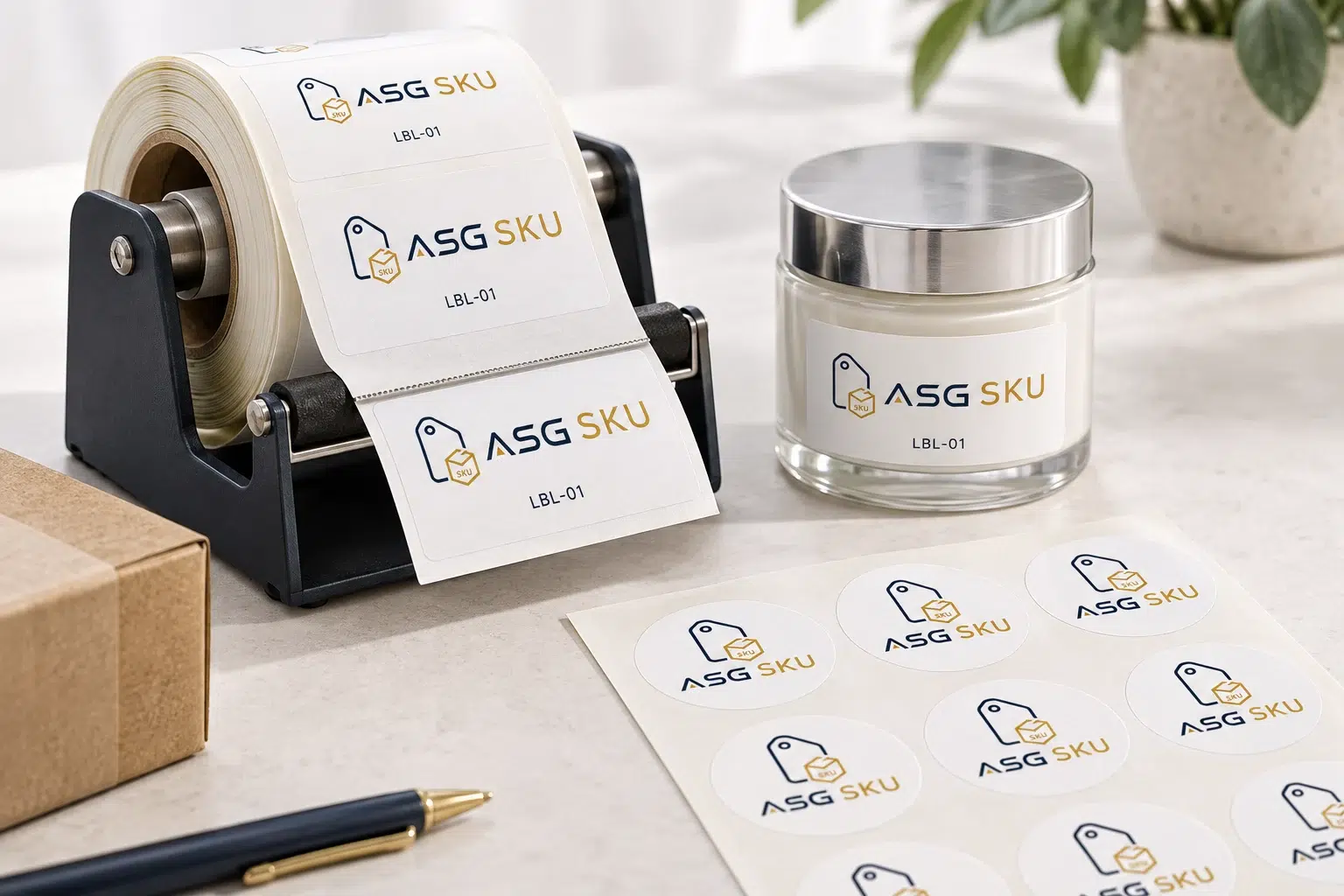
Choose material for your container and exposure.
Scroll across to compare all specifications.
| Material | Best for | Common sizes | Finish |
|---|---|---|---|
| Coated paper | Dry products, boxes and mailer seals | Round / rectangle; confirm fit | Matte or gloss finish |
| White or clear BOPP film | Bottles and jars; test exposure | Sized to the container | Lamination options to confirm |
| Kraft paper | Natural-looking dry packaging | Confirm on sample | One or two colors to confirm |
| Metallic or holographic film | Logo stickers and gift seals | Confirm on sample | Foil / die-cut options to confirm |
Common requests include 2 inch round labels, 2x4 labels and 3 x 4 labels; confirm the actual fit and availability. Material, adhesive, minimums and timing require a quote and sample.
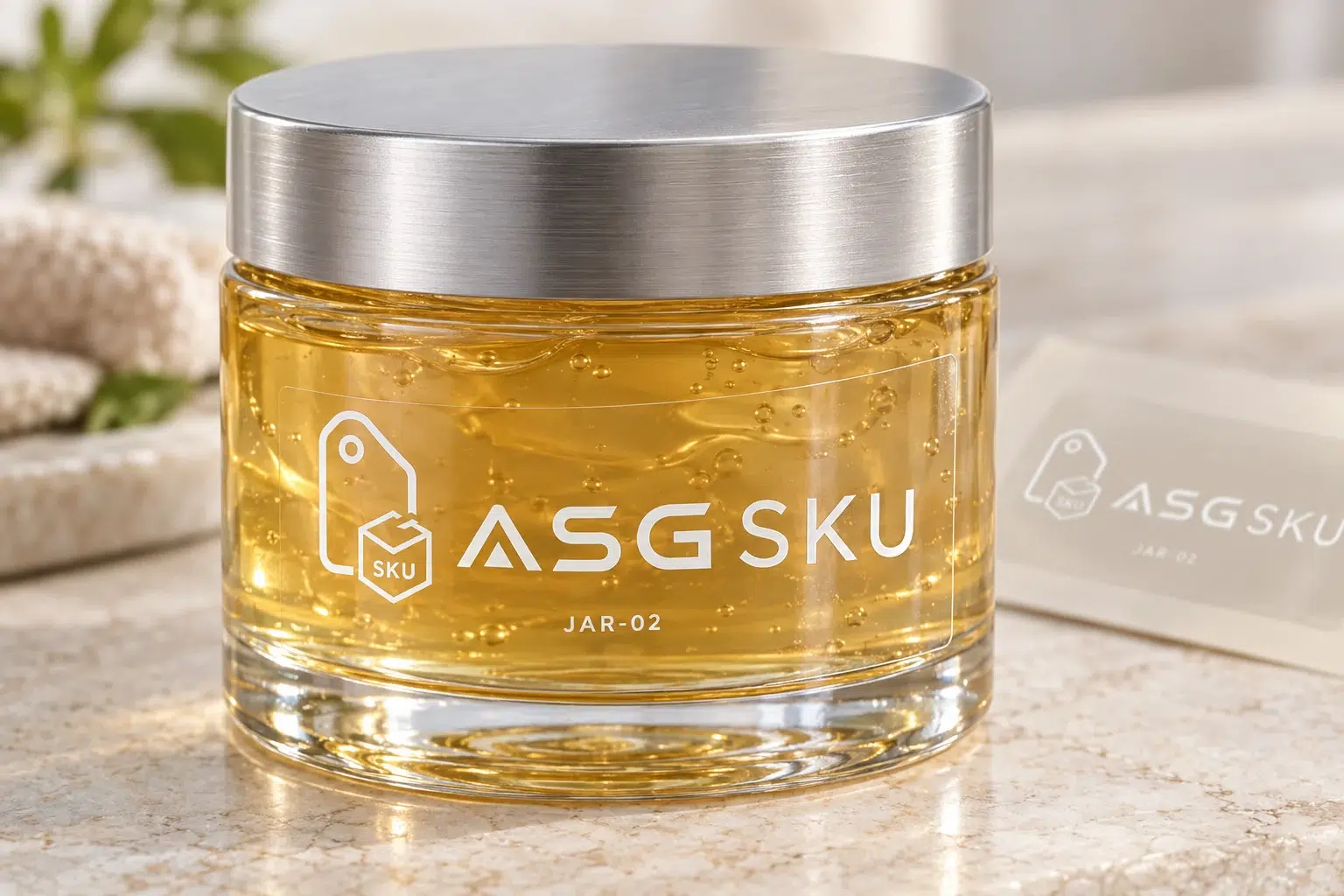
Consider clear film to show the container, or an opaque label to give small text a solid background. Test the sample under the expected moisture and handling conditions.

Use size stickers for sorting and logo seals for the outer pack. Record which size and branding combination belongs to each garment SKU.
See apparel branding
A round or die-cut logo sticker can brand a plain box or tissue wrap. Choose a size that is legible at the viewing distance and fits the available surface.
Size a seal to bridge the tissue fold or box flap. A decorative sealing sticker is not automatically a tamper-evident security seal; confirm that requirement separately.
Link a sticker to a care guide, reorder page or product video. Check the final destination and scan a printed sample at its actual size before use.
Record the product label, artwork version and any seal or care sticker against the SKU that uses it. Store different designs so they can be identified before application.
When artwork changes, agree an effective date, an approval owner and what happens to the old labels. Confirm the handover before the revised design is used.
| SKU | Product label | Add to order |
|---|---|---|
| SRM-VITC-30 | Clear label · Vitamin C | Logo seal on box |
| SRM-HYAL-30 | Clear label · Hyaluronic | Logo seal on box |
| CANDLE-CDR | Kraft label · Cedar | QR care sticker |
| TAG: GIFT | Same as SKU rule | + gold sealing sticker |
Example rules. Your rules are written from your SKU list.
Swipe or use the arrow keys to view all columns.

Specify where the label sits, how the container is oriented and which version belongs to each product. Include the work before the parcel is closed.
Confirm available services and checking methods for your project.
Review the label on the actual container.
Test the selected adhesive on the glass, plastic, paper or curved surface it will contact. Include expected moisture, temperature and handling in the sample review.
Read the smallest text at actual print size. Review contrast, logo placement and alignment against the artwork proof before approving the run.
Request the material data sheet and relevant sourcing documentation. A paper face material alone does not establish that the complete pack is recyclable or compostable.
Confirm material, shape, quantity and artwork per version.
Quantities, pricing and timing are confirmed in your quote. Check whether setup can be shared across variants; label application applies only if agreed. Compare label and sticker MOQs by material.
A clear print brief and a clear application plan answer different questions.
Scroll across to compare all specifications.
| Task | Print specification | Application plan to agree |
|---|---|---|
| Artwork | Design, cut line and print proof | SKU and approved artwork version |
| Delivery format | Sheet or roll; core and direction | Dispenser or manual application method |
| Placement | Label size and adhesive | Position and orientation on the container |
| Stock | Quantity for each design | Location, owner and identification checks |
| Reorders | Reprint quantity and timing | Review frequency, trigger and owner |
Planning comparison only. Confirm ASG SKU service availability and responsibilities on the project quote.
Approve the artwork, the physical label and its place on the product.
Share the container, surface and use conditions. Compare material, adhesive and dimensions.
Identify each variant. Review the cut line, bleed and text at actual label size.
Check fit, adhesion, print and placement on the container. Confirm sample cost and timing.
Agree quantity per design, price, lead time, roll or sheet format and delivery destination.
Record the label version, placement and extras for each product. Agree the application checks.
Materials, moisture, roll formats and application requirements.
Start with the container surface and where the product will be used. Compare paper for dry packaging and film for applications exposed to moisture, then test the complete label, including adhesive and print finish, on the actual container.
Do not assume that a film face material makes the complete label waterproof. Describe the expected exposure, such as wet hands, refrigeration or immersion. Confirm a suitable material, adhesive and finish, and evaluate the printed sample under those conditions before making a claim.
Sheets can suit small batches and individually supplied stickers. Rolls can work with hand dispensers or application equipment. Confirm the intended method, core size, roll direction and label spacing before ordering.
Minimums depend on material, size, print process, finish and quantity per design. List all variants in your request and confirm whether they can share setup.
Include labeling or relabeling in your request with the SKU list, current product condition and revised artwork. Confirm receiving, surface preparation, removal or covering of old labels, placement and checking responsibilities before sending stock.
Tell us which products need labels, the container surfaces and how each variant should be identified.
Fields marked are required. Select all packaging types that apply.
Add these details to your project notes.