Guide
What Is SKU-Level Packaging?
Updated October 4, 2026
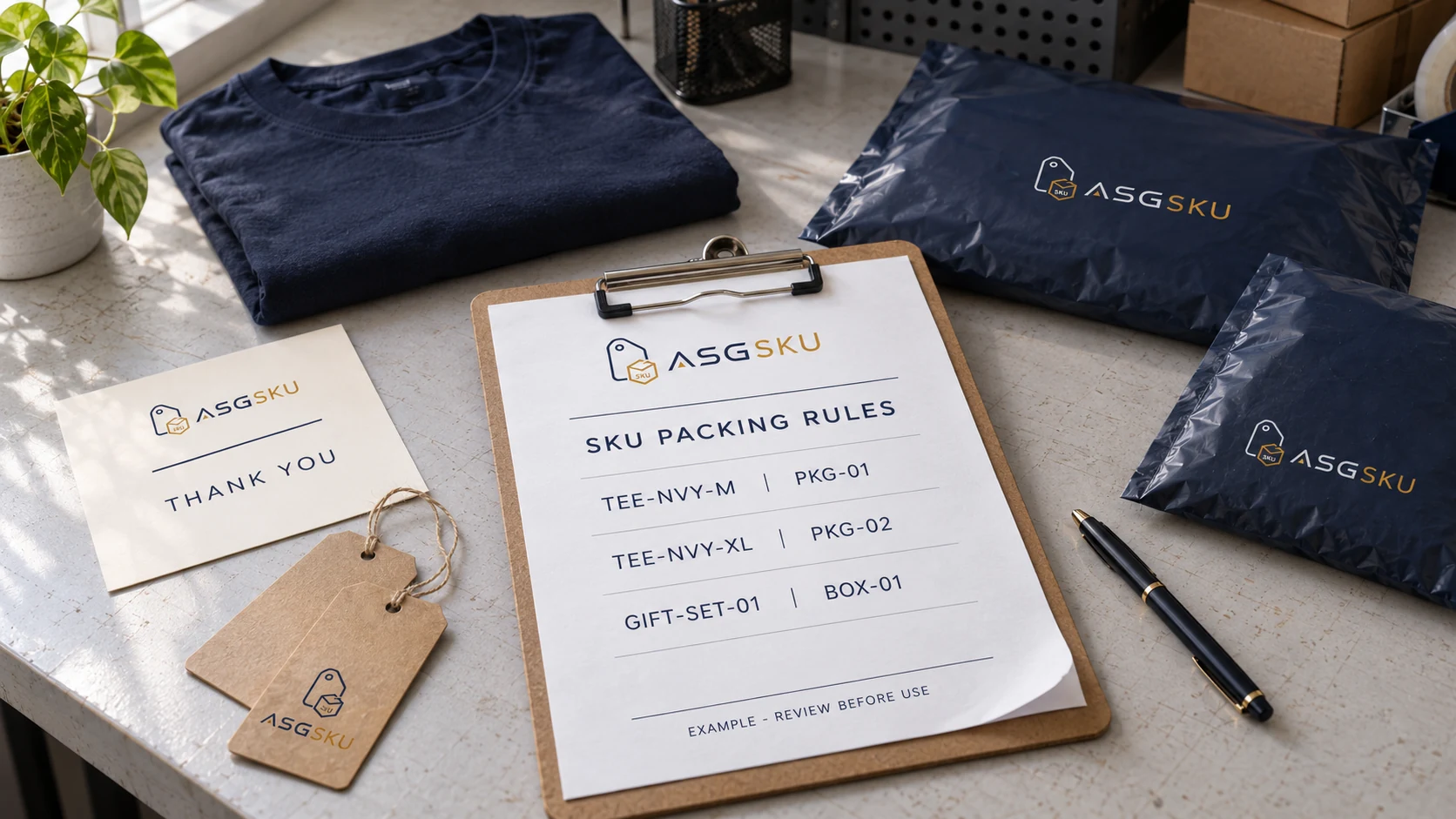
SKU-level packaging means linking a sellable product variant to a written packing rule: which bag or box to use, which label identifies the item, and which inserts belong in the parcel. Several SKUs can share one rule. Channel, destination and bundle conditions can add exceptions. The purpose is to make the packing decision explicit, so a packer can check it instead of relying on memory.
SKU packaging meaning, in plain terms
A SKU, or stock keeping unit, is an internal inventory code. It identifies a product or variant in your catalog. For example, TEE-NVY-M and TEE-NVY-L can identify the medium and large versions of one navy shirt. Shopify recommends unique SKUs for distinct variants so inventory records are not confused.
The packaging rule is a separate record linked to that code. It might point both shirt sizes to the same bag after a fit check, while a gift bundle uses a box. Do not read a size letter in the SKU and assume it determines a mailer size. Folded dimensions, protection and the complete order still need checking.
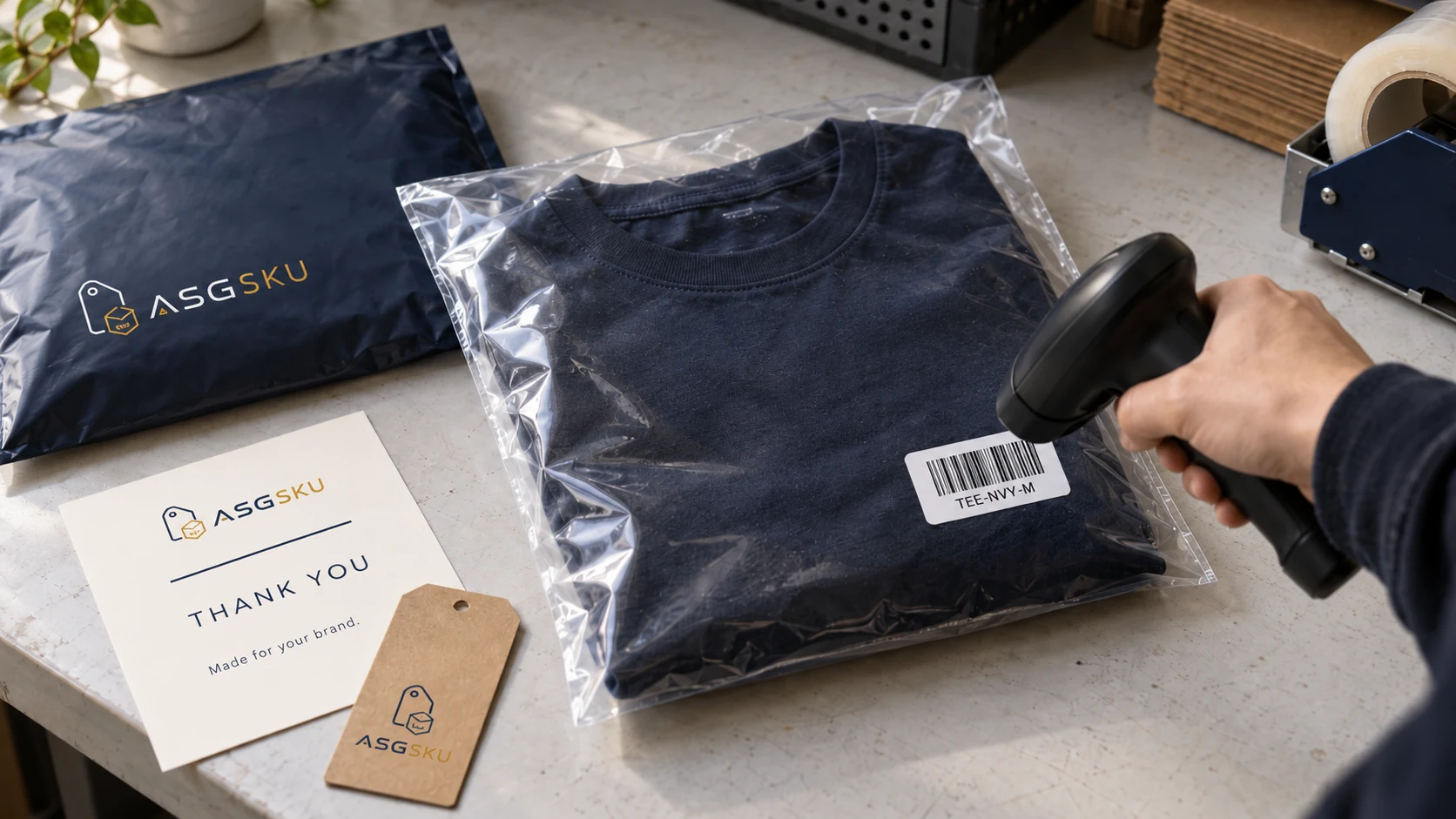
What is an SKU in packaging, compared with a barcode?
The SKU is an internal code; a barcode is a machine-readable data carrier. GS1 GTINs identify trade items and can be encoded in barcodes. A scanned value needs to map to the correct inventory record before it can help select a packing rule.
Why packaging by SKU matters
Different products can need different protection, presentation and labels. If those decisions live only in a chat message, a new packer has to interpret them again. A written rule gives the team a common instruction and a way to spot a mismatch before sealing a parcel.
Treat consistency as a process to verify, not a guaranteed outcome. A correct rule can still be applied to the wrong item, or become outdated when packaging changes. Pair the instruction with identity checks, version control and a clear stop-and-ask route for missing materials.
What goes into SKU packaging rules
Begin with the product SKU, the approved rule version and the conditions that select it. Then name the actual packaging items, label file and insert version. “Use the usual bag” is not enough when several similar materials are stored together.
The table is an example planning format. Record an owner and approval date alongside it. The SKU packaging rules page explains the wider relationship between product identity, materials and execution.
| Field | Decision | Example |
|---|---|---|
| Outer packaging | Which approved item and size? | Mailer PKG-01 after a fit check |
| Product identity | Which SKU and approved label file? | TEE-NVY-M linked to LABEL-01 |
| Inserts | Which version and quantity? | One approved thank-you card |
| Branding extras | What is added, and where? | Tag only at an agreed attachment point |
| Order conditions | Which channel or bundle changes the rule? | Use the approved channel-specific variant |
Download the SKU packaging rule worksheet (PDF)
Scroll across to see the example column.
Explore SKU packaging rules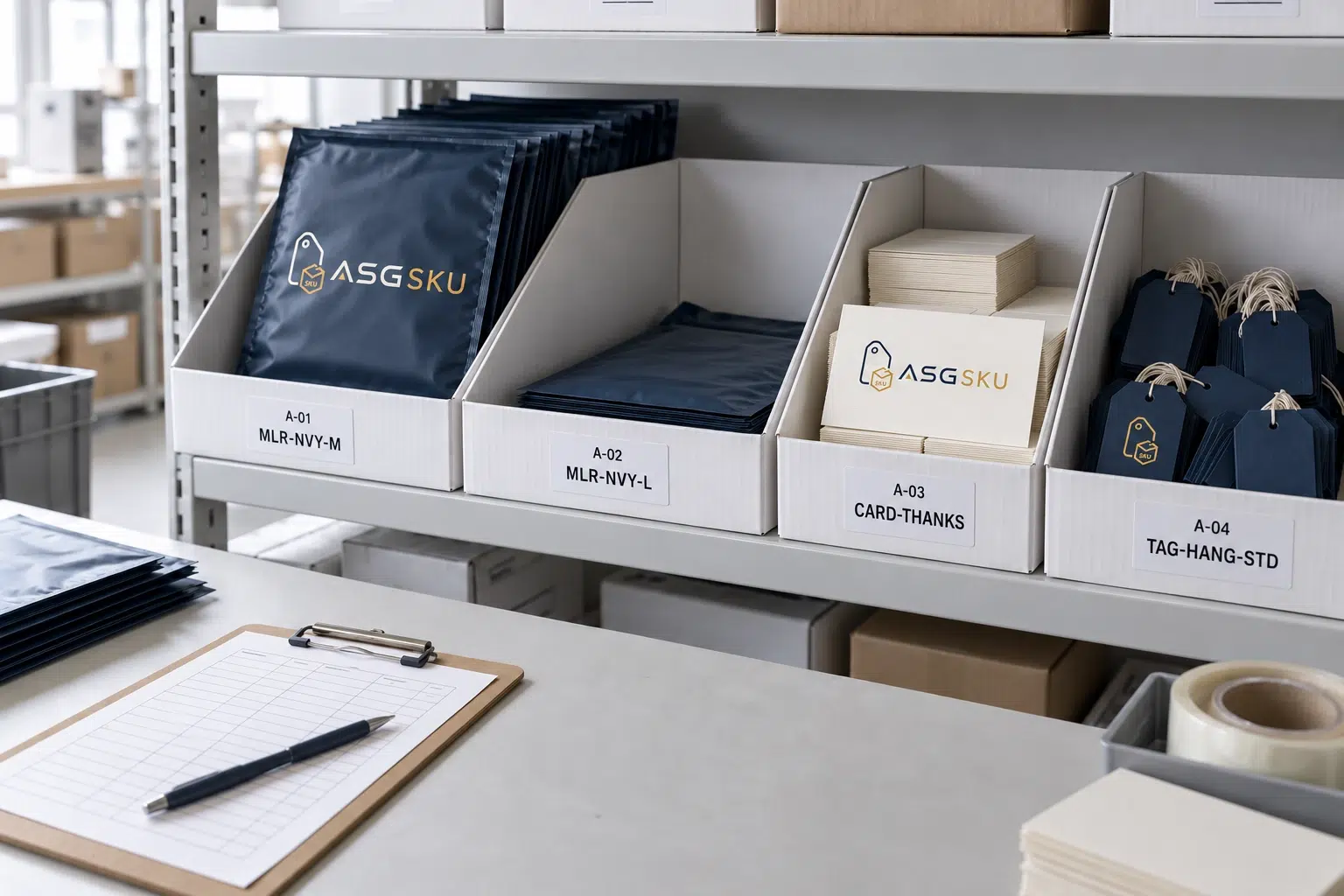
SKU-level packaging examples
These examples explain the decision logic. They are not customer cases, approved dimensions or evidence of a completed warehouse job.
Apparel by size
Two shirt sizes may share a mailer, while a bulkier garment needs a different format. Test the folded product and any inserts together. A tag attachment point belongs in the instruction; it should never be improvised by piercing a visible collar or panel.
Beauty sets by bundle
A single bottle and a multi-item set can need different protection and containers. Identify the set as well as its component products, and record whether the leaflet or insert changes. A packaging rule does not establish product safety or shipping eligibility.
Same product, different channel
A direct-to-customer order and a marketplace inbound shipment can need different labels and preparation. Keep the relevant channel condition explicit. Do not apply a universal “no inserts” or “FNSKU for every item” rule without checking the current requirements.
How to create SKU codes for packaging rules
Choose a naming convention your team can maintain. Product, color and size can make a readable code such as TEE-NVY-M; a bundle can have its own identifier. Document abbreviations so two people do not assign different meanings to the same code. Check existing systems before changing a live catalog.
The code is a lookup key, not the packing instruction itself. Store material identifiers, artwork versions and exception rules in the linked record. A legacy SKU can remain usable if its mapping is unambiguous. Avoid silently reusing an old identifier for a different product, because historical orders may still refer to it.
A practical way to review a packing rule
Our recommendation is to test the instruction with someone who did not write it. Give them the product, the proposed materials and the rule, then ask them to explain each choice. If they must guess which card version or attachment point to use, clarify that field before treating the rule as ready.
This is an editorial recommendation, not a claim about measured ASG warehouse results. Include a sample packed configuration and a record of approval. If the material is unavailable, the product does not fit or the label does not match, the instruction should identify who can authorize an alternative. Do not let an undocumented substitution become the new default.
Explore warehouse packaging execution
Is SKU-level packaging right for your store?
If every product uses the same packaging and inserts, a shared default may be enough. More detailed rules become useful when product dimensions, protection, bundles or channels change the packing decision. Start with the variants where a wrong choice would be hardest to detect or most costly to correct.
List the materials you already use, connect them to the relevant products and note exceptions. Review the actual packed result before extending the rule across the catalog. A useful rule is specific enough to follow, current enough to trust and easy to update when the product or packaging changes.
Browse custom packaging optionsFrequently asked questions
No. Custom packaging describes branded materials such as bags, boxes and cards. SKU-level packaging describes the instruction that selects and applies those materials for a product and its order context.
No. Several variants can share a package when fit, protection and presentation have been checked. Each SKU should map to the approved rule, even when the same rule serves several products.
A controlled spreadsheet or a warehouse system can hold the rules. Decide who can edit them, how versions reach the packing station and how obsolete instructions are removed. Test the handoff before relying on it.
It can document which identity and preparation checks apply, but it does not replace marketplace requirements. Barcode eligibility depends on the product, seller role and destination marketplace. Verify current requirements in Seller Central before approving the label; do not assume every item uses the same barcode type.
References
- Shopify: using SKUs to manage inventory
Internal SKU purpose and unique variant identifiers.
- GS1: how GTINs and barcodes work
The relationship between a product identifier and its barcode.
- Amazon Seller Central: barcode requirements
Check the requirements for your destination marketplace; sign-in may be required.