Wrong label or insert
Similar products can need different size labels, care cards or inserts. Record the exact combination so a packing decision does not depend on memory.
Connect each product to its mailer, label and insert, with clear instructions for variants, bundles and destinations.
One rule sheet for products, packaging and packing checks.

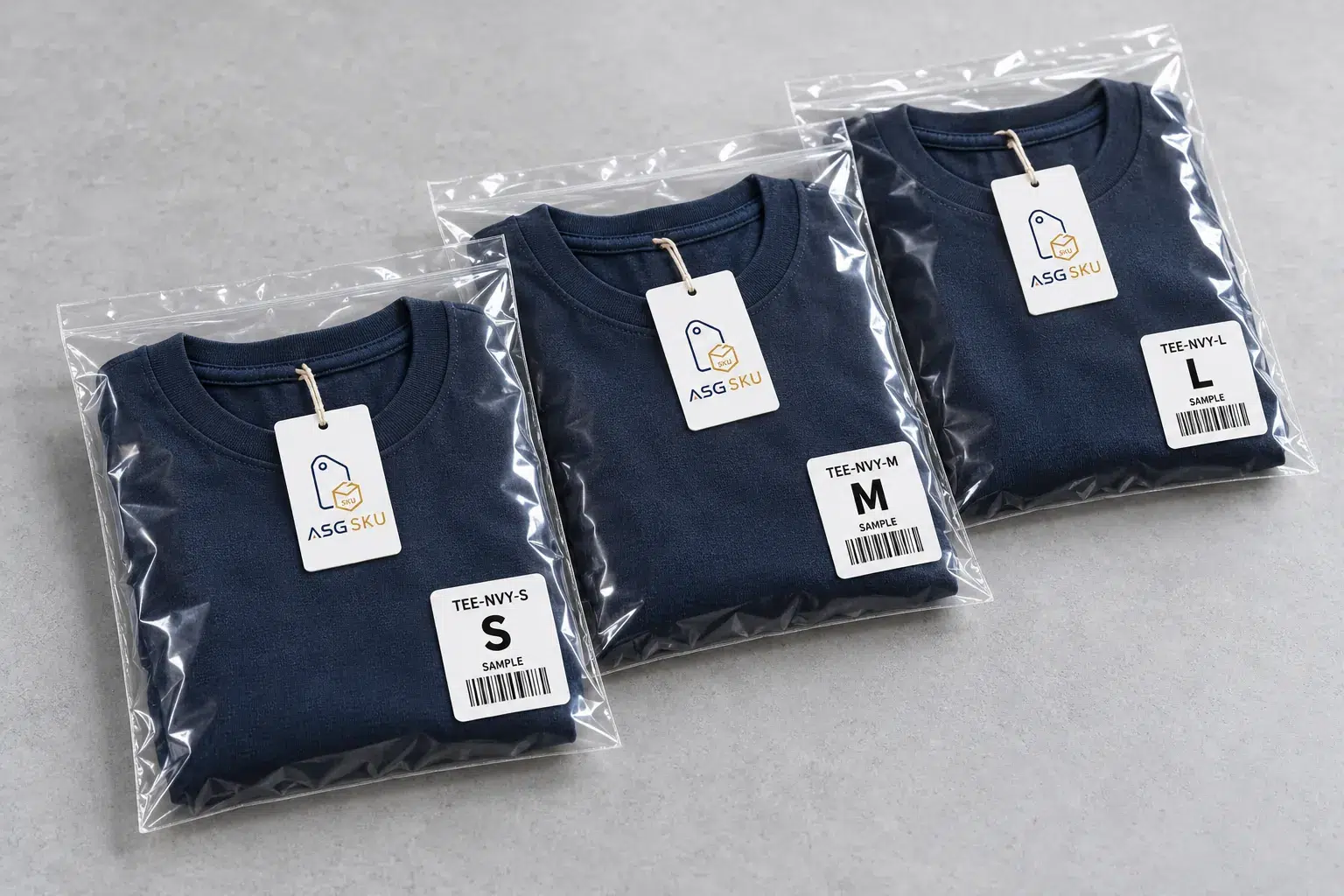
SKU packaging rules are written instructions that link a product code to its outer packaging, labels, inserts and packing checks. A SKU identifies a specific product or variant; its rule explains how that item should leave the warehouse.
A practical rule records a trigger, the packaging to use and the check required. Triggers may include a SKU, variant, bundle, channel, customer tag or destination. Define which rule wins when two instructions conflict.
Start with one clear base rule for each product or group of compatible variants.
Scroll across to compare all specifications.
| SKU | Outer packaging | Labels and inserts |
|---|---|---|
| TEE-WHT-S | Navy mailer · S | Size sticker, hang tag, thank-you card |
| TEE-WHT-L | Navy mailer · L | Size sticker, hang tag, thank-you card |
| MUG-CER-01 | Printed box · 01 | Fragile label, care card |
| SERUM-30ML | Gift box · small | Ingredient insert, seal sticker |
Example rules. We confirm packaging dimensions and combinations for your own product list.

Build checks into the rule: how the product is identified, how label and insert versions are matched, and what happens when an item does not match. Review whether scanning, a checklist or another check fits the agreed workflow.
For a new or changed rule, define the first-order check and who approves it. If a photo or scan record is required, include its format and retention in the brief. A rule should make exceptions visible, not promise that errors are impossible.
An example workflow to agree with the warehouse before use.
Read the SKU, variant, destination and any relevant bundle or customer tag.
Combine the base rule with approved exceptions. Resolve conflicting instructions before packing.
Collect the product and the packaging named in the agreed packing list.
Apply labels, add inserts and complete the checks specified by the rule.
Confirm the required checks and handle exceptions before releasing the order.
Bring the base rule and its exceptions into one packing instruction. Make it clear which items are added, replaced or left out.
Agree the rule owner, version, effective date and handling of old packaging before the workflow goes live.
| Trigger | Rule | Result on the packing list |
|---|---|---|
| TEE-NVY-M | Base SKU rule | Navy mailer · M, hang tag, thank-you card |
| BUNDLE-3PK | Bundle rule | Three tees bagged together, one set insert |
| TAG: VIP | Customer tag rule | + discount card |
| DEST: DE | Destination rule | German-language insert replaces English |
Example rule logic. We review conflicts and scope with you before go-live.
Swipe or use the arrow keys to view all columns.
A spreadsheet can work well. The important part is how instructions reach the person packing.
Scroll across to compare all specifications.
| Decision | In the rule sheet | In the agreed workflow |
|---|---|---|
| Rule version | Owner, version and effective date | Identify the version in use |
| Product match | SKU and variant identifiers | Agree how the product is checked |
| Exceptions | Bundle, channel, tag and destination logic | Resolve conflicts before packing |
| Changes | Record what changes and when | Agree how old packaging is handled |
| Evidence | List required checks and records | Confirm how those records are captured |
Planning comparison only; automation, scan records and QC services require project-specific confirmation.
Describe the work so setup, packaging and pack-out can be reviewed together.
Scroll across to compare all specifications.
| Quote factor | Details to provide | To confirm |
|---|---|---|
| Rule setup | SKU list, shared rules and exceptions | Scope and any setup fee |
| Rule changes | Expected frequency and approval process | Change handling and any fee |
| Pack-out | Order mix and packing steps | Handling scope and pricing |
| Extra pieces | Labels, inserts and packaging per order | Material and application costs |
| Checks and records | Any scanning or photo requirements | Availability and pricing |
Fees and billing units have not been confirmed. See pricing information or include these details in your request.

Link each packaging item to a clear name or code, its storage location and the rules that use it. A change to an insert or label should also identify what happens to the old version.
Agree who checks stock, what triggers a reorder and what happens if an item runs out. An approved substitute or a hold instruction is clearer than leaving the decision to the packer.
Prepare the inputs, then review one complete packing instruction.
Include variants, bundles, sales channels and destinations.
Name the mailers, boxes, labels and inserts you use or want quoted.
Check the base rules, exceptions and conflict priorities together.
Confirm stock responsibilities, packing checks, scope and pricing.
Review the agreed checks before applying the workflow more broadly.
Product codes, rule changes and the details to prepare.
An SKU, or stock keeping unit, is a code that identifies a specific product or variant, such as a navy T-shirt in size M. In a packaging rule, that code links the product to the mailer, labels and inserts it needs.
It means the product has an identifier for stock and order handling. Variants that differ in size, color or pack count usually need distinct codes so they can be counted and packed separately.
Use a consistent code based on useful attributes, for example TEE-NVY-M for a navy T-shirt in size M. Keep codes unique, document the naming pattern and avoid reusing a code for a different product.
A rule sheet can include destination and channel exceptions, such as a translated insert or different outer packaging. Specify how each exception changes the base rule and confirm the relevant requirements before use.
Record the change, its effective date and the person approving it. Agree how the warehouse receives the update, handles old materials and checks the first orders under the new instruction.
Prepare your SKU list, packaging types, order mix and exceptions. Include those details in the quote form below so the rule setup and execution scope can be reviewed together.
Share your products, packaging and exceptions so we can review the scope together.
Fields marked are required. Select all packaging types that apply.
Add these details to your project notes.