The first layer is unplanned
Choose what the customer sees when the package opens: the product, a printed wrap or an additional card. Match the tissue design to the rest of the package without assuming it will change buying or sharing behavior.
Plan custom tissue paper with your logo, from paper weight and print repeat to sheet size, folds and sticker seals.
Confirm quantities, sample costs and the wrapping scope for your products.
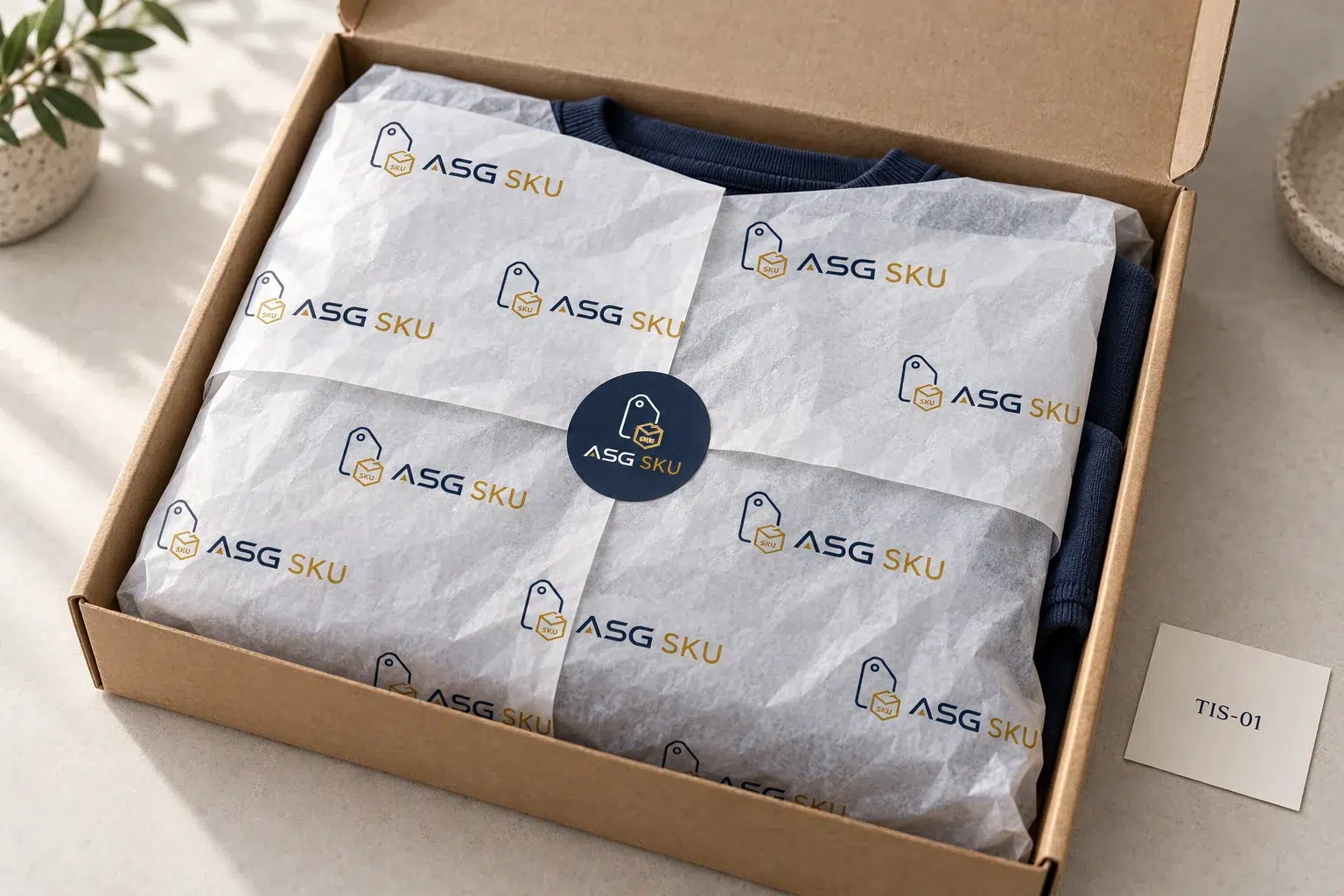
Three decisions to make before ordering printed tissue.
Choose what the customer sees when the package opens: the product, a printed wrap or an additional card. Match the tissue design to the rest of the package without assuming it will change buying or sharing behavior.
List the sheet quantity needed for each design and product. Compare a shared repeat pattern with separate collection designs, then confirm the minimums and storage requirements on the quote.
A sheet size alone does not explain how to wrap the product. Record the sheet count, fold direction, visible logo position and closure so the proposed work can be sampled and priced.
Custom tissue paper is thin wrapping paper printed with a logo or pattern and placed around products inside a box or mailer. It adds a printed layer to the unboxing experience; any protection or compatibility with a product needs separate confirmation.
For tissue paper with logo, compare an all-over repeat with a positioned mark at the proposed sheet size. Review paper weight, opacity, ink coverage and the folded result together as part of your custom packaging plan. Confirm storage and wrapping services before including them in the work scope.
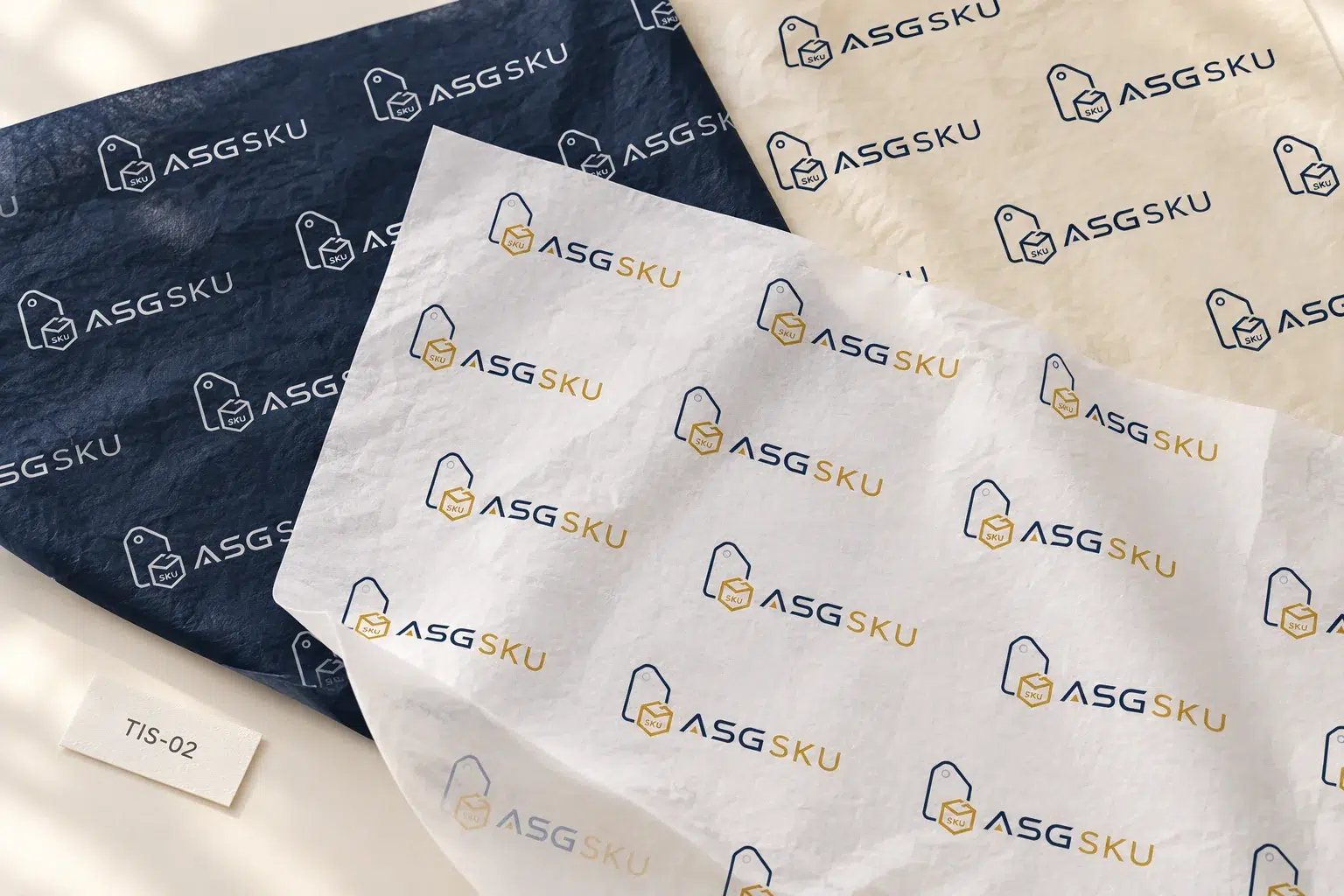
Compare paper weight, sheet size and artwork before confirming quantities per design.
Scroll across to compare all specifications.
| Paper | Planning use |
|---|---|
| Standard tissue | Apparel and everyday orders |
| Recycled tissue | Documented recycled-content request |
| Acid-free tissue | Sensitive-item requirements to assess |
| Colored tissue | Colored base and contrast to sample |
Confirm paper weight, sheet dimensions, material documentation and print compatibility in your quotation and sample. Review opacity, ink transfer and the logo position after folding around your product.
For wrapping the outside of a gift box, request a separate paper weight and sheet size suited to that box and fold. Compare it with tissue used around the product, and specify whether a custom sticker should close the wrap. Confirm paper, print and closure options on the sample.
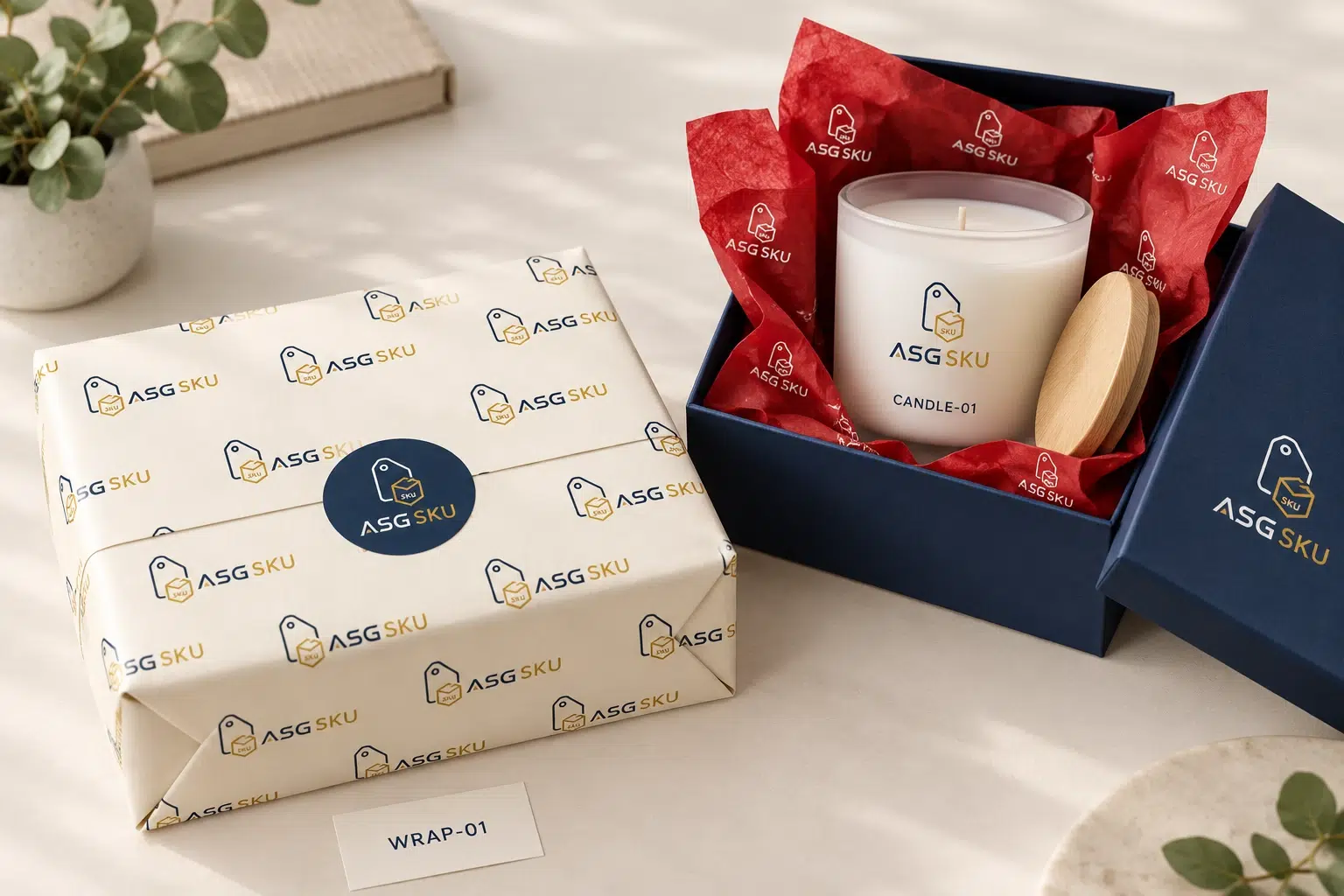
Plan the printed layer around the product and the opening sequence.

Plan the wrap around the folded garment, with a sheet count and seal position for each size group. Check the visible logo after folding, then decide whether a hang tag or card belongs in the same pack.

Plan tissue as a presentation layer alongside the product support the set needs. Check contact with bottles, closures and finishes; do not treat decorative tissue as proof that a fragile product is protected.

A separate pattern or colored sheet can be requested for selected gift orders. Record the approved version and changeover batch, and coordinate personalized tissue paper with the gift box and message.
Write the tissue design, sheet count, fold and closure into the packing instruction for each product. Include a sample image showing the intended logo position after wrapping.
For a seasonal or customer-specific version, confirm the supported order data, approval owner, effective batch and old-stock handling. Automated selection and stock alerts must be agreed explicitly.
| SKU | Tissue | Fold and seal |
|---|---|---|
| TEE-WHT-M | Approved white repeat · 1 sheet | Tri-fold, round sticker |
| DRESS-SLK-S | Verified compatible tissue · 2 sheets | Full wrap, agreed closure |
| GIFT-CANDLE | Approved seasonal tissue · 2 sheets | Presentation layer plus specified support |
| TAG: VIP | Same as approved SKU wrap | Optional approved card |
Example sheet counts and folds. We confirm these against the actual product, paper and package.
Swipe or use the arrow keys to view all columns.
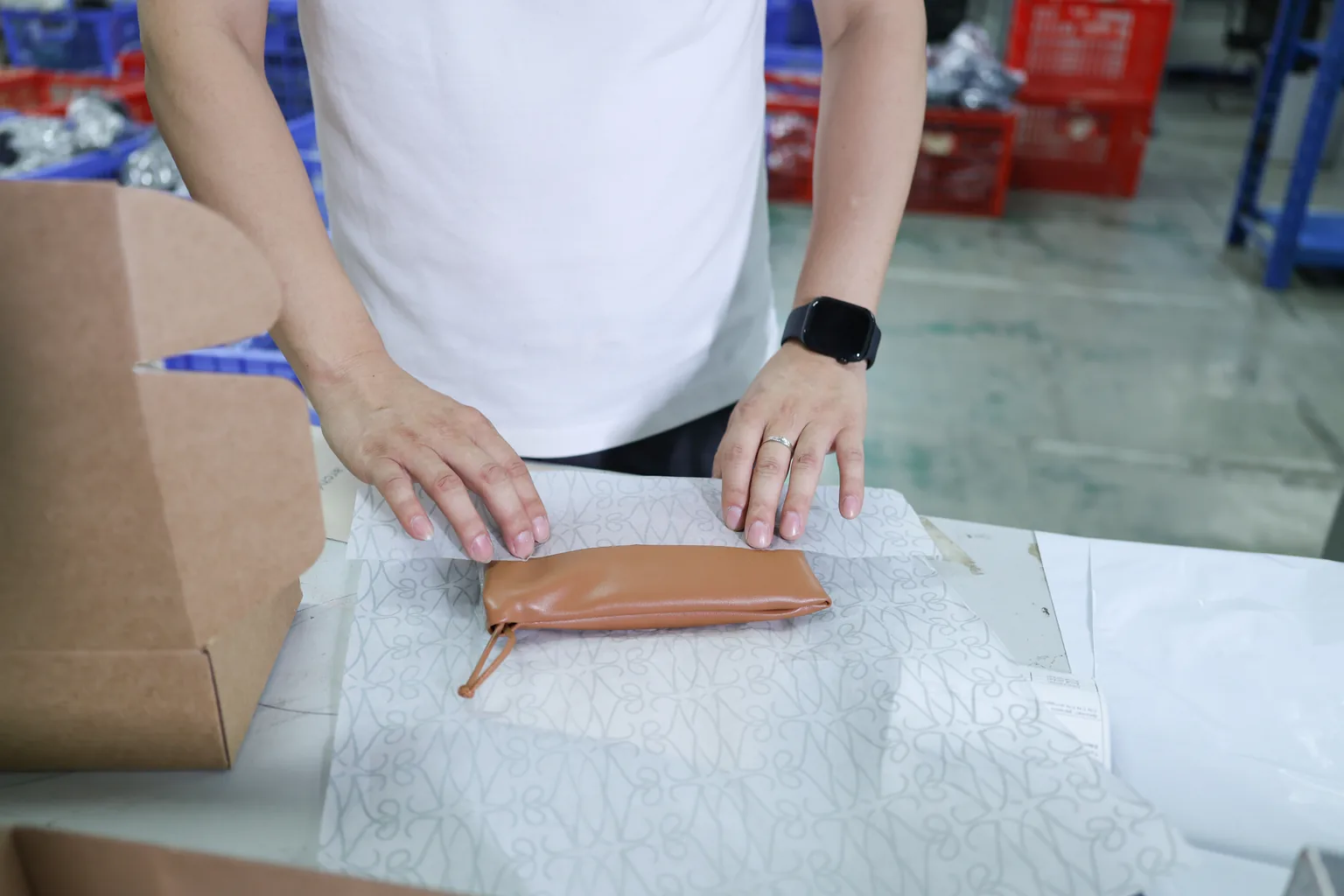
Request the wrapping sequence alongside the tissue order. Confirm the work location, storage conditions, product handling and available checking process before scheduling the batch.
Specify any barcode scan or QC photo you need in the quote; these are requirements to agree, not completed checks.
Ask for evidence specific to the paper and print you are ordering.
If FSC-certified paper is part of your brief, request a current, valid certificate and confirm that its scope covers the proposed paper and claim. Confirm permission and applicable conditions for using the FSC name or mark before adding it to the artwork.
Request the stated recycled-content percentage and supporting supplier declaration for the proposed stock. Color or texture in a sample does not establish recycled content; confirm the claim independently of appearance.
Ask for the proposed ink specification and any documentation your product requires. Review color, coverage, transfer and contact with the actual product on a printed sample. Ink type alone is not proof of an environmental claim.
Paper, sheet size, ink coverage and quantities per design shape the tissue paper printing quote.
Scroll across to compare all specifications.
| To plan | What to share | What affects the quote | Confirmed in your quote |
|---|---|---|---|
| Paper & sheets | Paper type, preferred weight and finished sheet size. | Stock choice, dimensions and sheets per design. | Paper specification, minimum quantity and unit price. |
| Print & sample | Logo file, repeat or placement, ink colors and coverage. | Artwork, coverage and the sample you request. | Print specification, sample scope and timing. |
| Wrap & delivery | Product dimensions, sheet count, fold and delivery destination. | Any wrapping, storage or delivery scope you request. | Agreed scope and production and delivery timing. |
Send the paper, sheet dimensions, quantity and artwork together. Minimum quantities, prices and timing are confirmed for your project in the quotation. Compare tissue paper MOQs by material.
Agree who handles the paper, artwork and wrapping instructions.
Scroll across to compare all specifications.
| Task | Printing and supply plan | Packing and stock plan |
|---|---|---|
| Tissue design | Paper specification, repeat and color proof | Approved version visible in the finished fold |
| Delivery and storage | Sheet quantities and delivery location | Agreed storage conditions and stock access |
| Wrap for each product | Sheet dimensions and compatible material | Sheet count, fold and seal per SKU |
| Seasonal changes | Approved artwork and replacement stock | Effective batch and old-stock handling |
| Reordering | Production quantity and schedule | Count records and reorder owner, if agreed |
This compares stages of the work, not supplier capabilities. Confirm services, evidence, charges and timing.
Approve the printed sheet and the folded sample together.
Share the product, fold dimensions and outer package. Request the paper weight, sheet size and compatibility information needed.
Provide a vector logo and color references. Request a repeat or placement proof at the proposed sheet size.
Agree sample fees and timing. Review opacity, color, contact with the product and the visible logo after folding.
Approve the material specification, artwork, sheet quantity, schedule and delivery location before the batch.
Record the design, sheet count, fold, closure and checking scope for each product. Confirm the supported execution process.
Paper choices, printing, quantities and wrapping requirements.
It depends on the presentation you want and the cost of printing and wrapping it. Compare a sample with your existing package, including material quantity and packing time. Branded tissue adds a designed layer, but it does not guarantee repeat sales, social sharing or product protection.
The minimum needs confirmation for the paper, sheet size and print design you request. Send quantities per design and SKU. Ask whether one shared repeat can serve several products and whether different designs have separate minimums.
Request a quote for your paper, sheet dimensions, artwork and quantity per design. Minimum quantities, unit prices and sample and production timing are confirmed for that specification. Include any wrapping, storage and delivery requirements so the quotation states the agreed scope.
Ask whether full-color printing is available on your selected paper and at the proposed coverage. Submit the artwork for review and approve a printed sample for color, detail, opacity and transfer before ordering. Do not assume the same result across different stocks.
Include wrapping in your project request so availability, location, handling and charges can be confirmed. Provide the product list, sheet count, fold and closure you want, along with any checking requirements, in the quote form.
Share your products, logo and wrapping requirements to plan the tissue, sticker seals and sample scope.
Fields marked are required. Select all packaging types that apply.
Tissue paper and Labels & stickers are selected. In your notes, add paper requirements, sheet size, print repeat, fold, closure and any supporting material documents you need.