The outside of the box is unplanned
Choose where the logo repeat should appear on the carton and how it relates to the shipping label. Review a taped sample before deciding whether the print gives the package the presentation you want.
Plan custom packaging tape with your logo, matched to the carton, print repeat, roll size and sealing process you need.
Confirm material specifications, sample costs and application requirements before ordering.

Three decisions to make before a printed roll becomes part of the packing plan.
Choose where the logo repeat should appear on the carton and how it relates to the shipping label. Review a taped sample before deciding whether the print gives the package the presentation you want.
Carton board, surface condition, packed weight and handling conditions belong in the tape brief. Agree an application and sample-checking process instead of selecting a roll by appearance or price alone.
Specify which approved roll belongs with each carton and channel. Record the seal pattern and any handling message, then confirm stock access and application responsibilities before the batch.
Custom packaging tape is carton sealing tape printed with a logo, colors or a short message. It combines the planned closure with a visible brand element. The backing, adhesive and carton must be specified together; the printed design alone does not establish seal performance.
Compare film tape, self-adhesive kraft paper tape and water activated tape as part of your custom packaging plan. Ask for the complete construction, roll dimensions and application requirements, then confirm supply, storage and carton sealing as separate parts of the work scope.

Specify the backing, adhesive, roll dimensions and print.
Scroll across to compare all specifications.
| Tape base | Specification to confirm |
|---|---|
| BOPP film, acrylic adhesive | Carton and acrylic grade to assess |
| PVC film tape | Adhesive, unwind and temperature range to confirm |
| Self-adhesive kraft paper tape | Paper construction and adhesive to confirm |
| Reinforced water activated tape | Reinforcement and activation process to confirm |
Confirm backing thickness, adhesive, reinforcement, roll width, length and core on your quote and sample. Agree any seal-performance checks on your packed carton.
Request a separate handling message where the product and route call for it, such as handle with care or open this side. Specify the wording, orientation and cartons that should receive it.


Separate the paper backing from the adhesive system when comparing kraft paper tape. Ask for the coating, reinforcement and adhesive specification. A paper appearance alone does not establish that the complete tape is plastic-free or accepted in a recycling stream.
This is the pressure-applied option to specify. Confirm the adhesive grade, roll and dispenser compatibility, carton surface and application conditions. Check the sample seal with your packed carton rather than assuming a paper backing has a particular load rating.
This option requires an activation process. Confirm the specified water application, dispenser, reinforcement if present and sealing method with the supplier. Any bond, tamper-evidence or handling-performance requirement needs an agreed test on the complete package.
Record the carton, shipment context and required label positions.
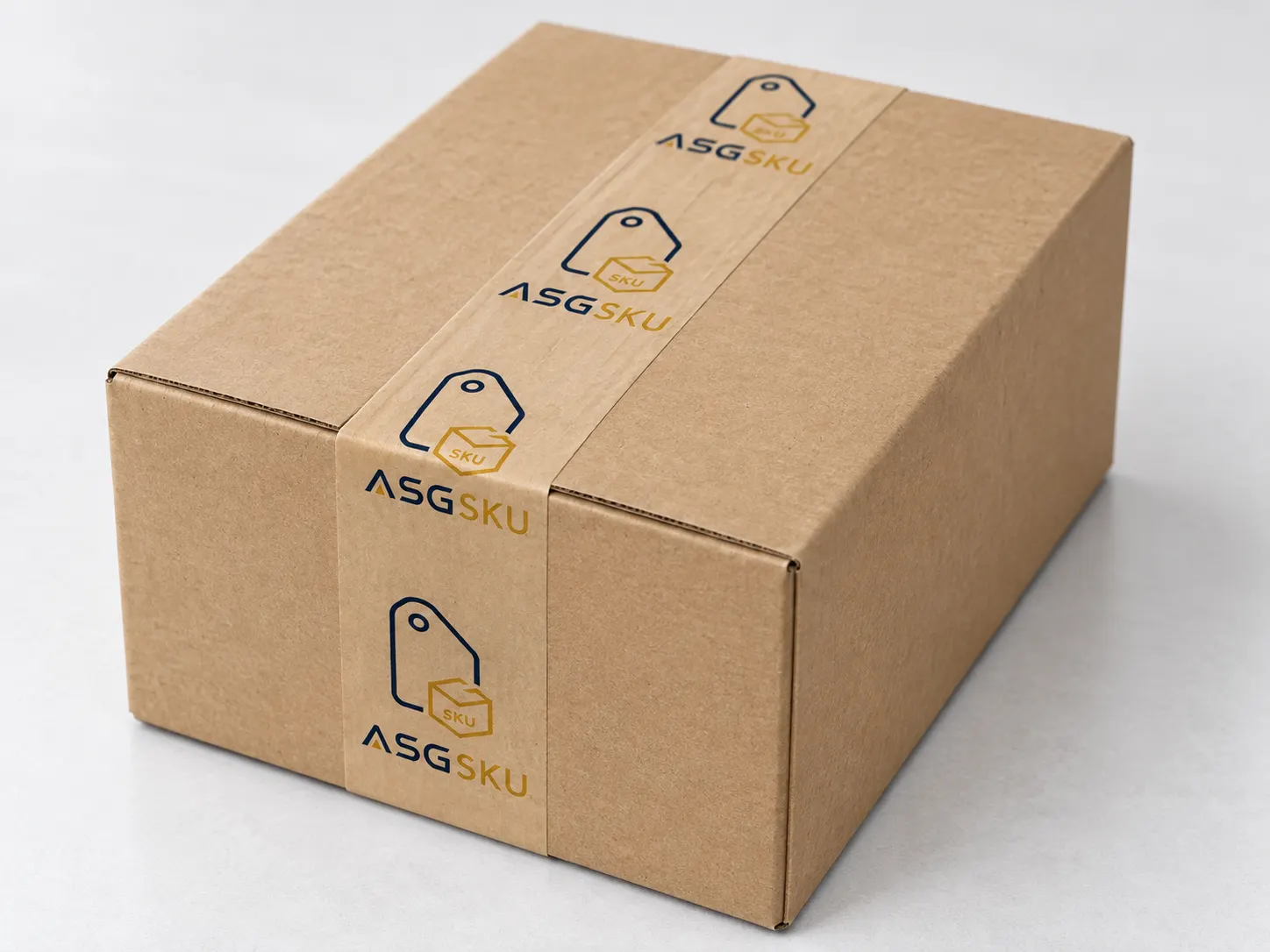
Plan the logo repeat across the selected carton seam, with a clear area for the delivery label. Compare the assembled result with a printed box and request costs for the actual quantities rather than assuming one option is cheaper.

Review the current instructions for the shipment and keep the sealing layout separate from the required label positions. Specify any plain-tape exception in the packing plan; do not assume one tape layout is approved for every marketplace shipment.

Start with packed weight, carton construction, storage and expected handling. Request a tape specification and seal pattern for those conditions, and agree any package testing. A reinforced construction alone does not establish that it will hold the load.
Record the approved tape, carton and seal pattern for each SKU and shipment context. Include any handling message and keep label locations visible in the sample packing instruction.
For a change, confirm the approval owner, effective batch and treatment of existing rolls. Order matching, automatic routing and reorder alerts are services to agree explicitly, not assumptions in the rule.
| SKU | Carton | Tape |
|---|---|---|
| MUG-SET-2 | Approved shipper · M | Approved logo tape; agreed handling message |
| CANDLE-L | Approved kraft carton · S | Kraft tape specification after sample review |
| CASE-WHSL-24 | Specified master carton | Tape and seal pattern agreed for the load |
| CH: AMAZON | Shipment-specific carton plan | Tape choice after current instruction review |
Example assignments. We confirm the tape specification, carton and application method for the project.
Swipe or use the arrow keys to view all columns.

Include carton sealing in the project request. Confirm the location, equipment, roll storage, application method and checking responsibilities before assigning the batch.
Specify any barcode scan or QC photo you need on the quote; the scope and available process require confirmation.
Agree sample checks using the carton, contents and conditions in your brief.
Provide the actual board, surface condition and packed weight. Ask for an application method and test plan covering the relevant storage, temperature, moisture and handling conditions; agree what counts as an acceptable seal.
Review the logo, color and repeat at the proposed tape width. Inspect an applied sample to see where the artwork lands at the seam and cut points. Confirm any print tolerance in the specification.
Confirm the core size, roll dimensions and dispenser requirements before production. Review unwind, cutting and application with the proposed equipment; request any activation or operator setup requirements.
Share the tape base, roll size, logo repeat and quantity per design.
MOQ, pricing and timing depend on the backing, adhesive, roll width and length, logo repeat and quantity per design. Include the carton and dispenser requirements. Any setup, sampling, freight, storage or carton sealing is agreed in the quote. See how MOQ works for printed packaging.
Agree responsibilities for supply, application and stock changes.
Scroll across to compare all specifications.
| Task | Tape supply plan | Carton sealing plan |
|---|---|---|
| Print and specification | Backing, adhesive, dimensions and approved artwork | Sample application and seal criteria |
| Roll delivery | Quantity, packing and destination | Storage conditions and roll access |
| Carton assignments | Clearly identified tape specifications | Tape and seal pattern for each carton |
| Shipment exceptions | Required artwork or plain-roll variants | Approved shipment-specific instruction |
| Reordering | Quantity and production schedule | Stock records and reorder owner, if agreed |
This compares stages of the work, not supplier capabilities. Confirm services, evidence, charges and timing.
Approve the tape specification and the sealed sample together.
Provide carton sizes, packed weights and expected handling conditions. Request a suitable backing, adhesive system and roll size for sample evaluation.
Provide a vector logo and color references. Request a proof showing the repeat length and proposed placement along the carton seam.
Agree sample charges and timing. Review print, unwind and the seal on your carton using the proposed application method and checks.
Approve the specification, artwork, roll quantity, schedule and delivery destination before the production batch.
Record tape, carton, seal pattern and shipment exceptions. Confirm application availability and the checking process before packing begins.
Tape selection, quantities, recycling claims and application scope.
The better choice depends on the specific tape, carton and application process. Compare the backing, adhesive, reinforcement if present, equipment requirements and cost for your shipment. Ask for sample testing against the load and handling conditions; neither material name establishes superior strength or tamper evidence.
The minimum needs confirmation for the tape construction, width, length and print design. Send the quantity required for each variation, and ask whether widths or artwork versions have separate minimums or setup charges.
Request a per-roll quote with the tape dimensions and construction stated. Your per-roll price, MOQ and schedule are confirmed in the quote for the stated specification and quantity. Include artwork, samples, freight and any application work so you can compare equivalent scopes.
It depends on the complete tape construction and the receiving recycling system. Ask for details of the paper, coating, adhesive and any reinforcement, plus relevant supplier documentation. Confirm acceptance locally before making a recyclability claim; a kraft appearance does not establish that a tape is plastic-free.
Include sealing in your project request so availability, equipment, location and charges can be confirmed. Send carton dimensions, packed weights, tape requirements and monthly volume in the quote form, together with the checking and photo records you need.
Share your carton dimensions, packed weights and logo to plan the tape specification, sample and sealing requirements.
Fields marked are required. Select all packaging types that apply.
Packaging tape is selected. In your notes, add the roll size, adhesive or activation requirements, logo repeat, handling message and requested carton-sealing checks.